 Smart Garage Door Insulation Tips, Reviews & DIY Guides
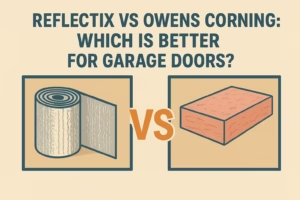 Choosing between Reflectix-style reflective insulation and Owens Corning fiberglass panels depends on climate, door type and your willingness to DIY. This guide breaks down the physics, installation tradeoffs, longevity and cost so you can pick the best option for your garage door.
Basic Differences — How They Work
Reflective foil (Reflectix): consists of foil layers and bubbles or foam that reflect radiant heat. It’s especially effective when there’s an air gap and when radiant heat (solar gain) is the primary issue. Fiberglass panels (Owens Corning): work by trapping air within fibers, which resists conductive heat flow — measured as R-value.
Performance in Different Climates
In hot, sunny climates, reflective insulation often reduces peak inside-door temperatures because it reflects radiant energy. In cold climates, conductive heat loss dominates, and a higher R-value panel (fiberglass or thick foam) usually performs better overnight.
Installation & DIY Complexity
Reflectix: cut-to-fit, tape/staple, quick. Foam board: measure, cut, adhesive. Fiberglass: cut carefully, wear PPE, secure properly. For casual DIYers, Reflectix and foam board are most accessible; fiberglass is ideal when you want contractor-grade thermal performance and don’t mind more careful handling.
Durability & Moisture Considerations
Reflectix is lightweight but can tear; foil faces can delaminate if exposed to moisture and abrasion. Fiberglass panels, if left unfaced in damp conditions, may absorb moisture — use faced panels or moisture-resistant foam where humidity is an issue.
Cost & Value
Reflective kits are the most budget-friendly and provide immediate value for many homeowners. Foam boards offer high R-value for less money than fiberglass in many cases. Fiberglass costs more but can be the right investment if your garage is attached to conditioned space and winter heat retention is critical.
Hybrid Strategies
A popular approach is hybrid: a reflective layer to address radiant heat plus foam or thin fiberglass for conductive resistance. This balances summer and winter performance and often fits within a reasonable budget.
Bottom Line
- Pick Reflectix for quick installs and radiant heat control.
- Pick Owens Corning Fiberglass for maximum conductive R-value in very cold climates.
- Pick Foam Board for the best R-value-per-dollar with decent moisture resistance (polyiso/XPS).
Each material has its place. Match the choice to your climate, door type and long-term goals, and you’ll get the best cost vs. comfort result.
“I get commissions for purchases made through links in this post.”