 Smart Garage Door Insulation Tips, Reviews & DIY Guides
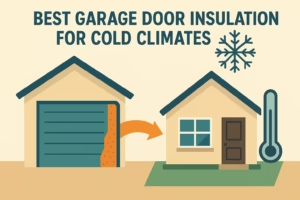 If you live in a region that sees freezing winters, an uninsulated garage door can feel like an open freezer wall. Metal panels radiate cold, and every gust of wind sneaks through gaps. The good news: the right garage door insulation can turn your space from icy to comfortable – without spending a fortune on heating.
Why garage door insulation matters more in cold climates
Cold air infiltration through an uninsulated garage door can lower adjacent room temperatures, increase heating costs, and even cause condensation and rust on tools and vehicles. Insulation acts as a thermal barrier — it slows down conductive heat loss and keeps cold air from transferring inside.
In northern U.S. states and mountain regions, insulating a garage door can reduce temperature swings by 10–20°F inside the garage, and help maintain more stable indoor conditions for rooms above or next to the garage.
Top insulation types for winter performance
1. Rigid Foam Board (Polyiso or XPS)
Rigid foam board is the most popular choice for cold climates. It offers high R-value per inch and excellent moisture resistance. Polyisocyanurate (Polyiso) and extruded polystyrene (XPS) are both great; Polyiso performs slightly better in warmer conditions, while XPS maintains R-value at lower temperatures.
Best for: Attached garages or places where insulation thickness is limited.
👉 Check foam insulation boards on Amazon
2. Fiberglass Garage Door Insulation Kits
Fiberglass panels — such as Owens Corning Garage Door Insulation Kit — deliver outstanding cold-weather performance. Each panel contains dense fiberglass batts that resist conductive heat loss. Once installed, these panels can push total door R-values into the R-8 to R-12 range, depending on the door type.
- Pros: Excellent thermal resistance; long-lasting; available in pre-cut sizes.
- Cons: Slightly heavier; needs protective facing and careful installation.
👉 View Owens Corning kit on Amazon
3. Reflective + Foam Hybrid Kits
In extremely variable climates (cold but sunny), a hybrid system — reflective foil on the outer layer with foam behind it — balances radiant and conductive protection. It prevents radiant heat loss on sunny days while maintaining insulation overnight.
Many DIYers achieve great results by layering a Reflectix-style foil over XPS foam boards, sealing edges with aluminum tape.
👉 Shop hybrid insulation materials
Installation tips for cold-weather effectiveness
- Seal first: Before installing insulation, replace cracked weatherstripping on sides and bottom of the door.
- Cut precisely: Even small gaps around insulation panels create cold bridges that reduce effectiveness.
- Use foil tape or adhesive foam strips to seal panel edges tightly.
- Check the balance: Added insulation weight can affect spring tension — adjust if needed.
Should you insulate the rest of the garage?
For attached garages, the best energy efficiency comes from insulating both the door and adjacent walls or ceilings that connect to living space. This prevents “thermal leakage” — warm air escaping through uninsulated surfaces.
Learn how to compare door vs wall insulation in our full guide:
👉 Garage Door vs Wall Insulation — What Matters More?
Best overall garage door insulation for cold climates
For pure cold resistance and longevity, fiberglass panels like Owens Corning’s kit are the top choice. They combine solid R-values with long-term durability. For DIYers on a tighter budget, rigid foam boards deliver most of the same benefits at a lower cost, provided they’re installed carefully and fully sealed.
| Material | R-Value (Approx.) | Skill Level | Durability |
|---|---|---|---|
| Fiberglass panels | R-8 to R-12 | Intermediate | 10+ years |
| Rigid foam board | R-6 to R-10 | Beginner | 8–10 years |
| Reflective + foam combo | R-6+ | Beginner–Intermediate | 10 years |
Bottom line
Garage door insulation definitely works in cold climates — but only if the right material is chosen and installed properly. Fiberglass panels offer the highest R-values; rigid foam boards are the best DIY value. Always finish by sealing edges and updating your door weatherstrip for the biggest improvement.
Want to see how different materials perform in other climates? Read our related guide:
👉 Best Garage Door Insulation for Hot limates
👉 See best-selling cold-climate kits on Amazon
“I get commissions for purchases made through links in this post.”